
Arcaute & Johannes Nielsen
Unfamiliar Presences
11/28 - 12/28, 2026
-
Unfamiliar Presences
Arcaute & Johannes NielsenFaces and bodies are among the forms most familiar to us. We recognise others through their gaze, expressions, and gestures, and try to understand what they feel. Yet familiar contours do not always lead to certainty. A face can be clearly visible and still remain difficult to read; a body, even when divided or opened by gaps, can retain a vivid presence.
Unfamiliar Presences brings together paintings by Arcaute and sculptures by Johannes Nielsen, taking the human figure as a starting point for exploring how familiarity and strangeness intertwine in the act of looking. Through the artists’ distinct visual languages, the exhibition poses an open question: when we recognise a human figure, what exactly do we recognise?
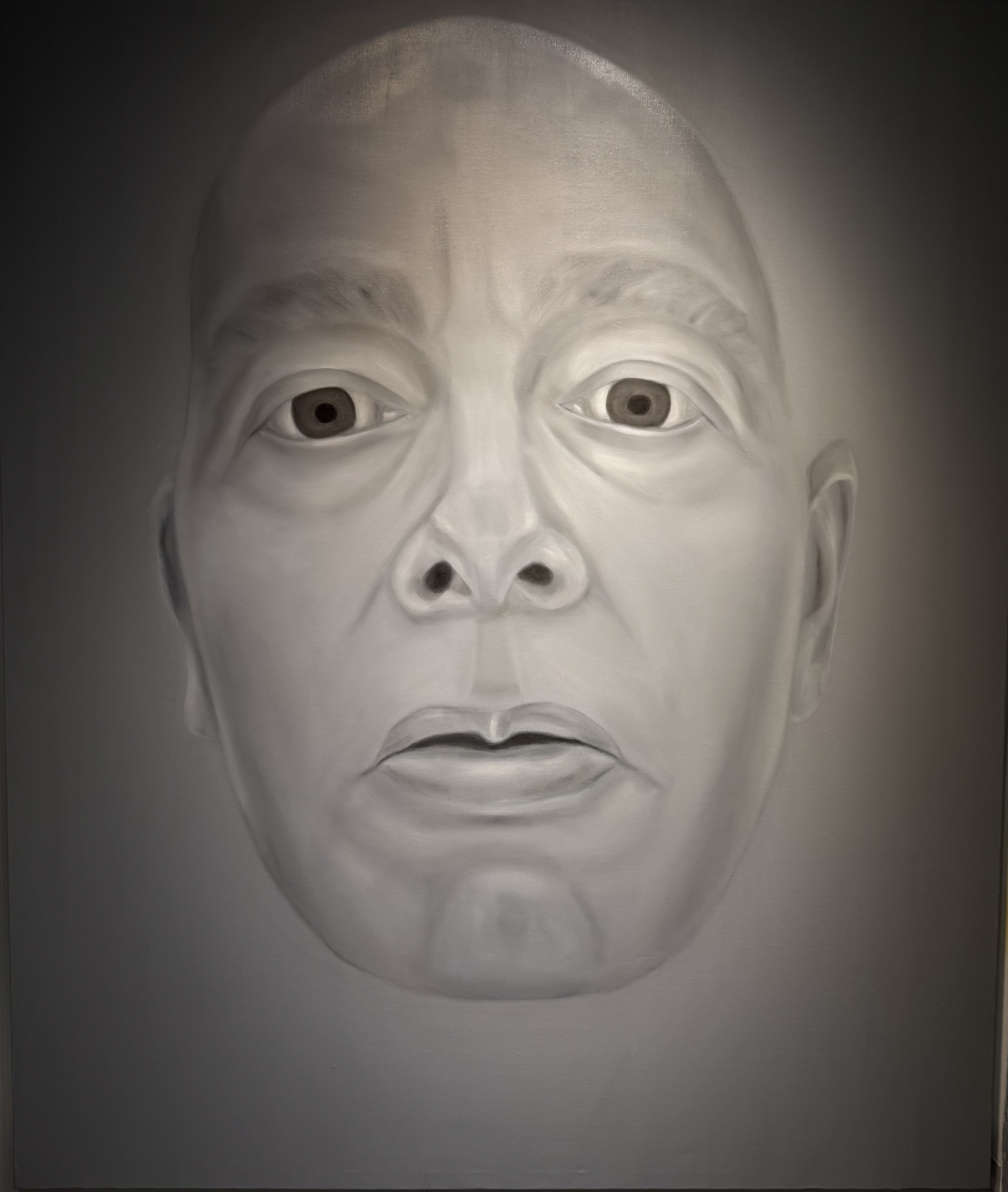
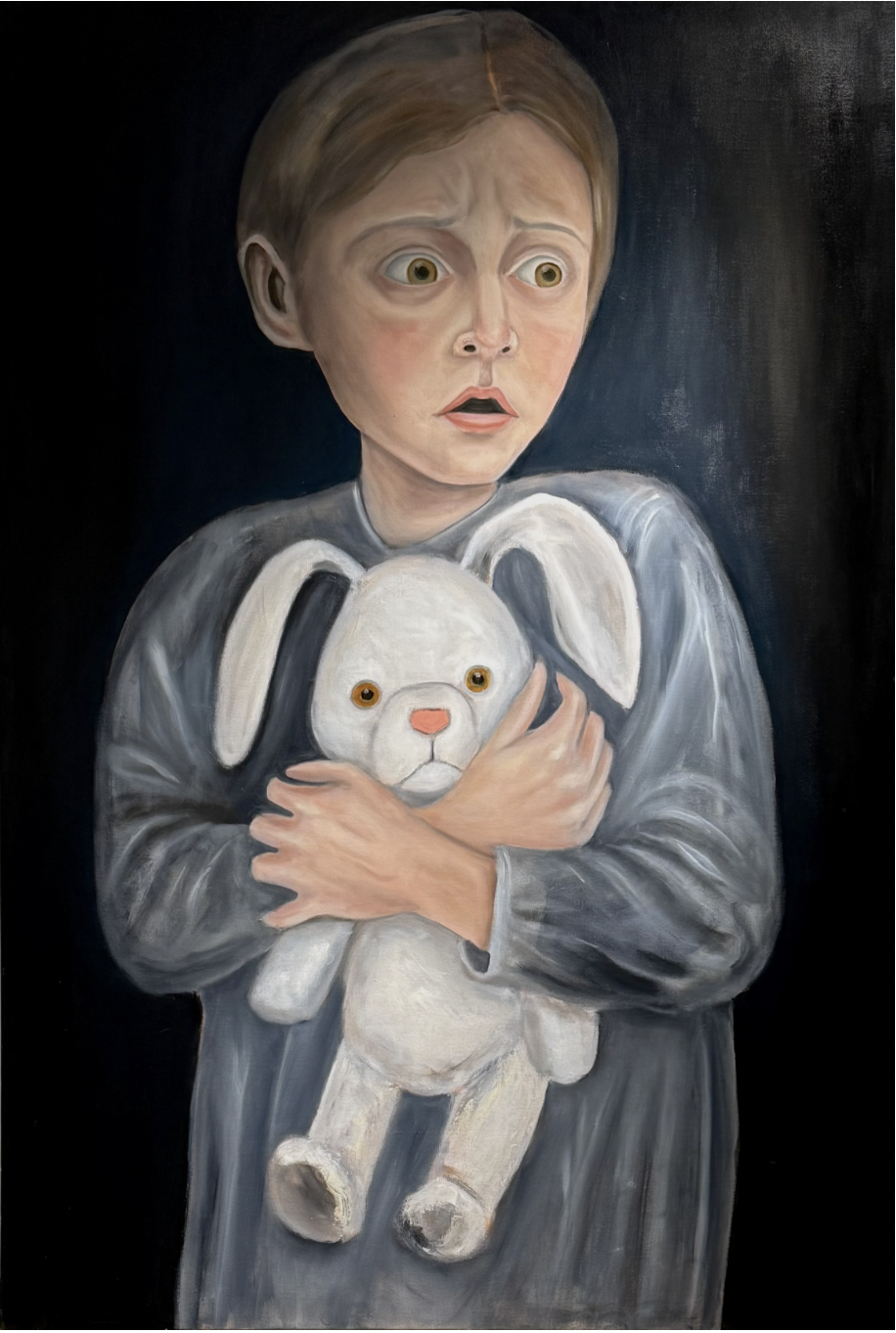
In Arcaute’s paintings, portraits appear alongside skulls, robed figures, and imagery with religious associations. Some faces look beyond the picture plane; others lower their eyes, while certain contours gradually merge into dark backgrounds. Contrasts of light and shadow, together with visible brushwork, draw attention to expressions and postures. Compositions that recall classical portraiture and religious painting invite further associations: the figures before us have particular features, yet also seem to echo images from other times. We can recognise their forms and details without necessarily being able to assign them an identity or a story.
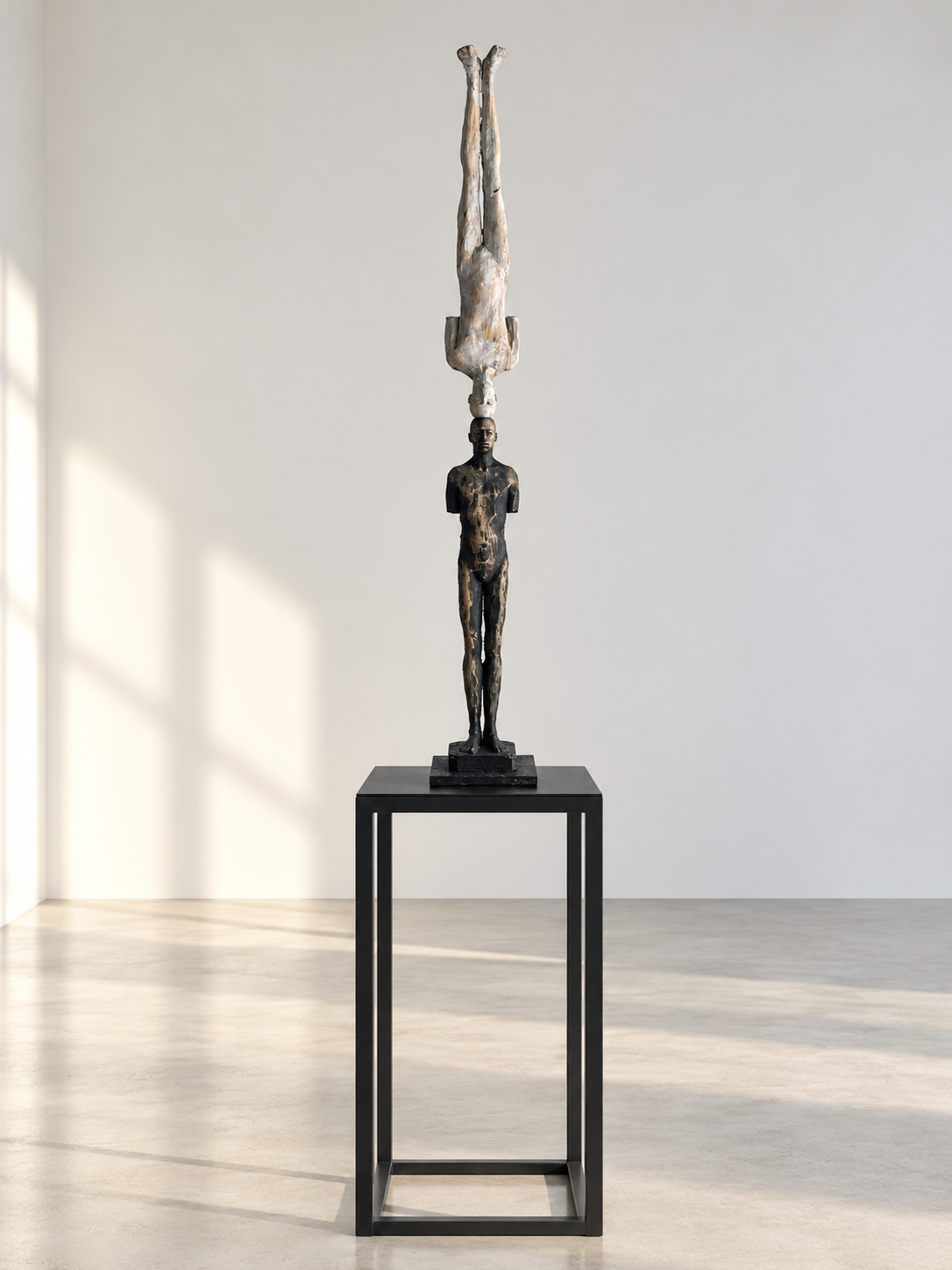
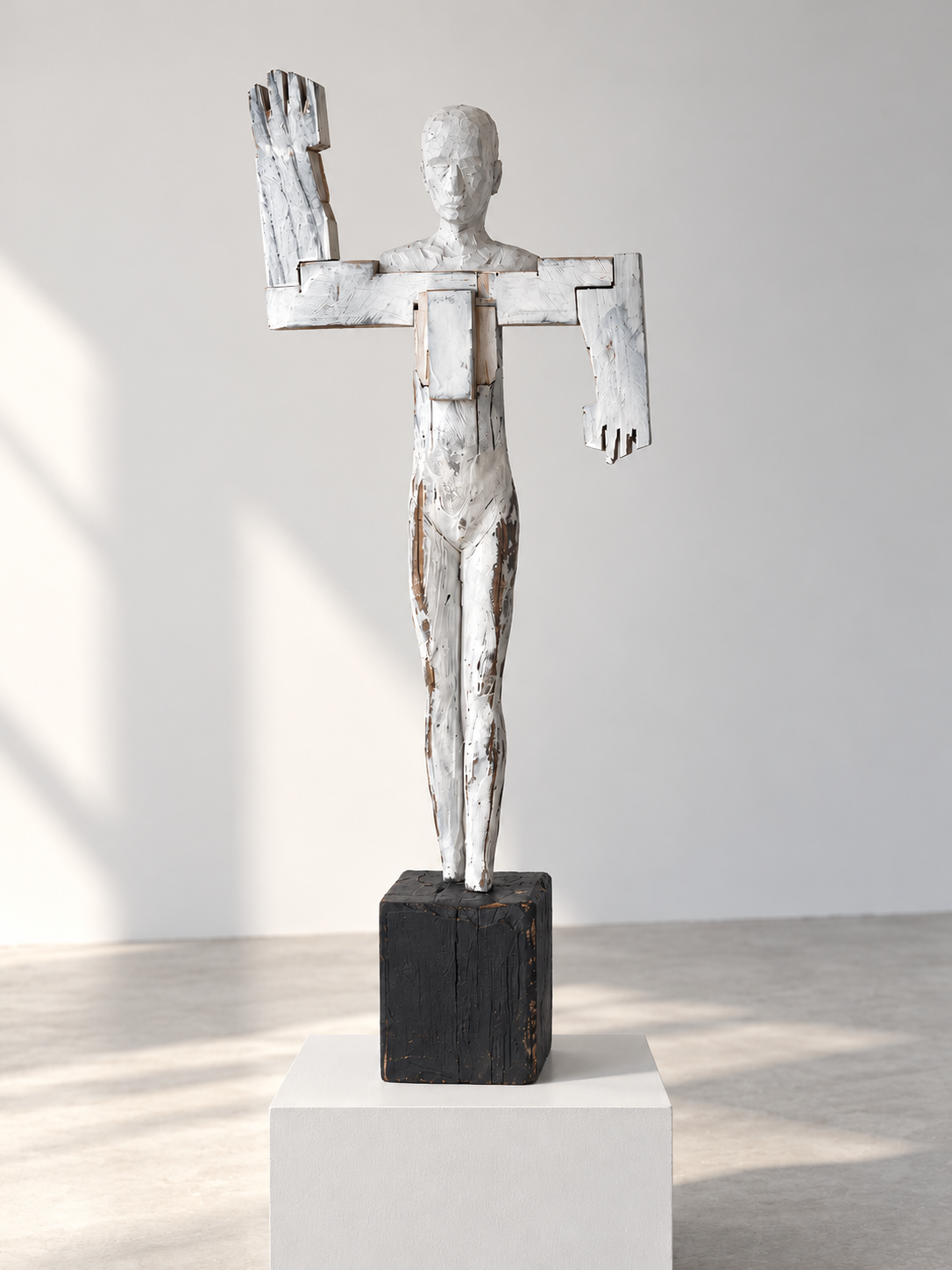
In Nielsen’s sculptures, the body comes into view differently. Divisions, inversions, and reconnections alter the relationships between head, torso, and limbs. Gaps, wood grain, and joints make the construction of the figures visible. Human contours coexist with the shapes of the material itself. A standing posture, a slight inclination, or an extended limb can evoke a sense of our own bodies. As our viewpoint changes, separated parts may appear to align or reveal greater distances between them.
Seen together, these paintings and sculptures bring a question into focus: how does a human form acquire a sense of presence? Painted gazes and sculpted gestures offer different kinds of encounters within the exhibition space. Viewers can approach a face or move around a body, shifting their attention between detail and whole, surface and volume. Familiarity and strangeness emerge and recede throughout this process.
Unfamiliar Presences considers the distance that remains even after recognition. An image or a form can draw us in and hold our attention while retaining something that resists immediate explanation. The exhibition invites viewers to spend time among these faces and bodies, allowing understanding to unfold through looking, with room for different responses and associations.
-
陌生的在场
面孔与身体,是我们最熟悉的形象之一。我们从目光、表情与姿态中辨认他人,也尝试理解他们的情绪。然而,熟悉的轮廓并不总能带来确定的认识。一张面孔可以清晰可见,却难以读懂;一个身体即使被分隔、留空,仍能让我们感到某种鲜明的存在。
《陌生的在场》汇集北北 Arcaute的绘画与汉森(Johannes Nielsen)的雕塑,以人形为线索,关注观看中相互交织的熟悉感与陌生感。展览从两位艺术家不同的视觉语言出发,提出一个开放的问题:当我们认出一个人的形象时,我们究竟认出了什么?
在北北的绘画中,人物肖像与骷髅、长袍及带有宗教意味的形象交替出现。有的面孔迎向画外,有的垂下目光,有的轮廓逐渐融入深暗的背景。明暗的对照与可见的笔触,使人物的表情和姿态成为凝视的焦点。那些让人联想到古典肖像与宗教绘画的构图,也为观看带来不同的联想:眼前的形象既具有具体的面貌,又似乎与其他时代的图像遥相呼应。我们可以辨认其中的形态与细节,却未必能为它们确定一个身份或故事。
在汉森的雕塑中,身体通过另一种方式进入视野。切分、倒置与重新连接,改变了头部、躯干和四肢之间的关系;空隙、木纹与接合处,则使形体的构成清晰可见。人的轮廓与材料的形状在同一件作品中并存。一个站立的姿态、一处倾斜或一段伸展的肢体,便可能唤起我们对自身身体的感受。随着观看角度的改变,分离的部分时而相互衔接,时而显露出更大的间隔。
将这些绘画与雕塑并置,人形如何形成一种“在场”,成为展览关注的线索。绘画中的目光与雕塑中的姿态,在空间中建立起不同的相遇方式。观众可以靠近一张面孔,也可以绕行一个身体,在细节与整体、平面与体积之间调整自己的观看。熟悉与陌生,也在这一过程中不断交替。
“陌生的在场”所指向的,是辨认之后仍然存在的距离。一个形象能够吸引我们、使我们停留,同时保有无法被立即解释的部分。展览邀请观众与这些面孔和身体共处片刻,让理解随着观看慢慢展开,也为不同的感受与联想留出空间。
Selected Artworks
Artists
北北 Arcaute
Arcaute is a Mexican artist working primarily in painting. His work encompasses portraiture, religious imagery, and fantastical figures, drawing on Greco-Roman mythology, Christian iconography, and Mexican visual traditions associated with death. Through contrasts of light and shadow, expressive brushwork, and figurative compositions, he brings echoes of classical painting into a contemporary context. Recurring faces, robes, and skulls form a distinctive visual vocabulary across his work.
Johannes Nielsen
Johannes Nielsen was born in Falkenberg, Sweden, in 1979 and has lived and worked in Beijing since 2007. He studied at Lund Art School and worked as an assistant to sculptor Patrick O’Reilly in Dublin. Working with bronze, wood, and other materials, Nielsen centres his sculptural practice on the human figure, attending to gesture, proportion, balance, and space. Through elongation, division, and reassembly, his sculptures explore the body between stillness and movement, continuity and separation.