
YIN MAOJIAN
The Stone Pusher
7.11 - 8.11, 2026
-
In Greek mythology, Sisyphus pushes a massive boulder up the mountain day after day, only for it to roll back down again, repeating the cycle endlessly. From this myth, Camus perceived a form of revolt: amid seemingly meaningless labor, one may still choose to carry out each act of pushing with lucidity, focus, and passion. This is the deeper meaning behind the title The Stone Pusher: it speaks to a sustained state of being, a posture of seeking order through repetition and affirming existence through labor.
Yin Maojian is precisely such a “stone pusher.”
At first glance, viewers may easily approach Yin Maojian’s works through the conventional frameworks of abstract painting or easel painting. Yet he cannot be so simply categorized. Working within the lineage of abstraction and spatial poetics opened up by masters such as Mondrian and Rothko, Yin is a painter, but also an installation artist and spatial artist. His works create volume and structure within the flat surface, pushing the two-dimensional toward the multidimensional. This spatiality suggests that space is not merely a container or carrier in the material sense. Rather, in the quiet contemplation of spatial forms, the imagination continues to unfold, and the meaning of existence is continuously enriched within that process of imagining.
The generation of such space and meaning originates from a form of labor that borders on ascetic practice.
Yin Maojian’s creative process is a prolonged battle of attrition, an ongoing series of confrontations in which each round brings a new opponent or challenge. His method involves repeatedly building up layers of acrylic color, then continuously sanding them down, ultimately arriving at structures and colors shaped by chance. Rolling, painting, cutting, carving, sawing, assembling, nailing, touching, accumulating, layering, covering, concealing—these concrete acts of making all recede from view through the final action of “sanding.” As he has said, “I paint as if I were painting Chinese painting.” It is a dynamic and fluid process. The resulting image is both the outcome of the artist’s individual planning as an “I,” and something that carries the dual quality of the controllable and the uncontrollable.
Yin Maojian titles his works according to the starting and ending dates of their creation, allowing specific periods of lived time to crystallize into the measure of the image. In this way, the temporality of labor becomes increasingly clearly marked. Sometimes a work takes months; sometimes it spans across years. Waiting for his new works always requires patience—and this very act of waiting forms the most fundamental temporal scale of his creative posture.
At the same time, his visual vocabulary continues to expand. From canvas to wood panel, from aluminum panel to glass, his multifaceted exploration of materials grants “synthesis” a richer material texture. The geometric forms that appear on the surface retain a minimalist sense of order, while the repeated sanding gives rise to a texture that is warm and jade-like. Hard-edged squareness and rounded softness coexist; a blunt ingenuity dissolves disorder. Beneath the smooth, polished fields of color, speckled residues cling like dust—at once hidden and revealed. More notably, his recent works have gradually moved from the planar toward the sculptural. In wooden installations ranging from several centimeters to twenty centimeters in thickness, the image is no longer merely visual, but becomes a spatial object that can be felt and sensed. They hang on the wall, yet seem ready at any moment to break free from it, using their own volume to measure the real distance between viewer and work.
This is The Stone Pusher: through daily accumulation, sanding, overturning, and beginning again, Yin Maojian nourishes individual life within the work, using his hands to pose repeated questions about the meaning of existence. His works have no endpoint, only process; no answers, only questions.
And these stones, in the end, leave behind the warmth of the human hand upon the summit of time.
-
在希腊神话中,西西弗斯日复一日将巨石推上山巅,石头旋即滚落,循环往复,永无止境。加缪从中读出了反抗——在无意义的劳作中,人依然可以选择清醒地、专注地、充满激情地完成每一次推举。这便是“推石头的人”这一命名的深意:它关乎一种持续的状态,一种在重复中寻找秩序、在劳作中确证存在的姿态。
尹茂健正是这样一个“推石头的人”。
初看尹茂健的作品,观者很容易陷入抽象绘画或架上绘画的传统认知。但他不能被简单归类——他是在蒙德里安和罗斯科等大师开创的抽象与空间诗学框架下工作的艺术家,是绘画艺术家,同时也是装置艺术家或空间艺术家。他的作品在平面中创造体积和结构,从二维推向多维。这种空间性提出:空间并非物质意义上的载体容器,在对空间形象的静观中,想象力不断地进行想象,存在的意义在想象中不断丰富。
而这种空间与意义的生成,源自一种近乎苦修般的劳作。
尹茂健的创作是一场“车轮战”,是连续不断的战斗,每一回合都有新的对手或挑战。他的方式在于将丙烯颜色层层堆积,再不断进行打磨,最终得到具有偶然性的结构和色彩。滚、涂、切、割、锯、拼、钉、触、累、叠、覆、盖——具体的制作都因最后“打磨”的动作而匿迹于我们眼前。他说:“我画画像画中国画。”这是一个动态而流变的过程,最终得到的画面,既是艺术家以个体的“我”计划的结果,又具有可控和不可控的双重意味。
尹茂健以创作的起止时间为作品命名,让具体的生命时段凝结为画面的刻度,这种劳作的时间性被愈发清晰地标记出来。有时数月,有时跨年,等待他的新作总需要耐心——而这种等待本身,恰恰构成其创作姿态最基本的时间尺度。
与此同时,他的视觉语汇也在持续扩展。从布面到木板,从铝板到玻璃,材料的多重探索赋予“综合”以更丰富的物质质感;而画面上呈现的那些几何形态,既保留了极简的秩序感,又因层层打磨而呈现出温润如玉的肌理。方硬与浑圆共存,钝巧消解着无序;平整光洁的色彩之下,点状物如微尘般残附,既是藏匿,也是彰显。更值得注意的是,近年的作品逐渐从平面走向立体——从厚度数厘米到二十厘米的木板装置,画面不再仅是视觉的,更成为可触可感的空间物。它们挂在墙上,却仿佛随时要挣脱墙面,以自身的体积去丈量观者与作品之间的真实距离。
这就是“推石头的人”——在日复一日的层累、打磨、推翻、重来之中,尹茂健将个体生命涵养于作品,用双手完成一次次对存在意义的叩问。他的作品没有终点,只有过程;没有答案,只有提问。
而这些石头,终究在时间的山巅上,留下了人的温度。
Open the checklist 查看作品清单
Selected Artworks
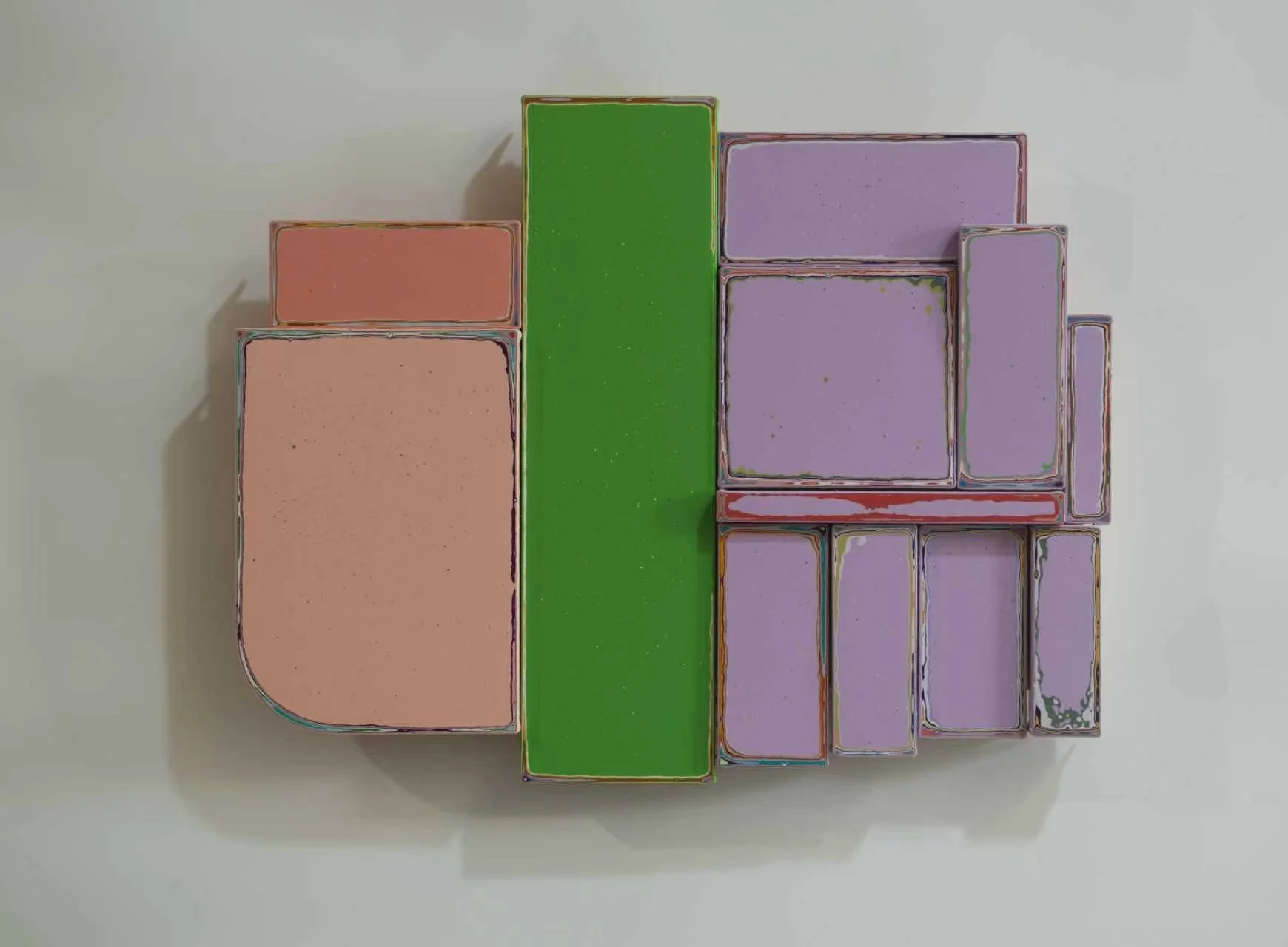
2025-76 , 2025 , Mixed Media on Wood Panel , 60 × 47 × 6 cm
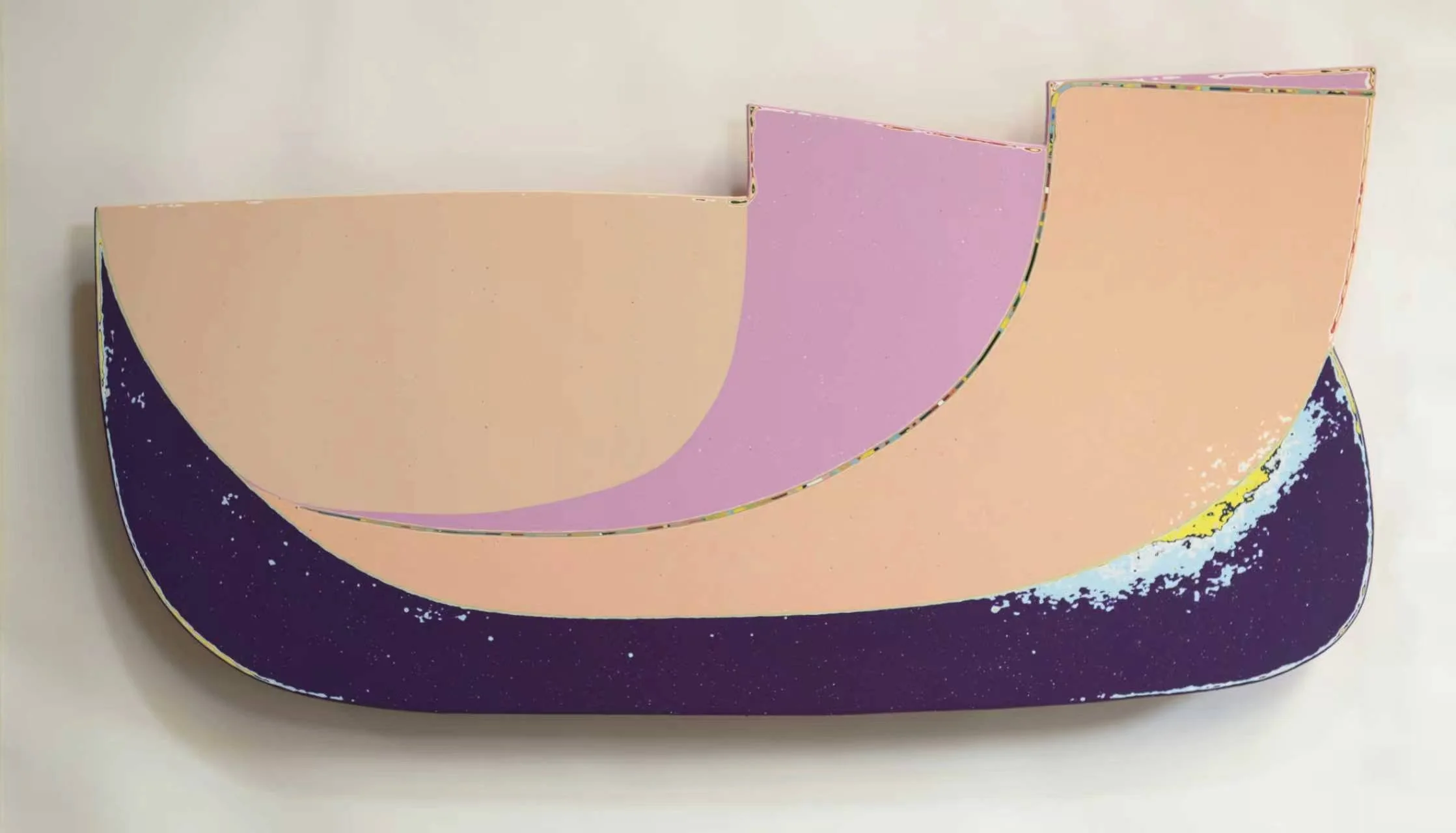
Purple VERT , 2025 , Mixed Media on Canvas , 122 × 60 cm
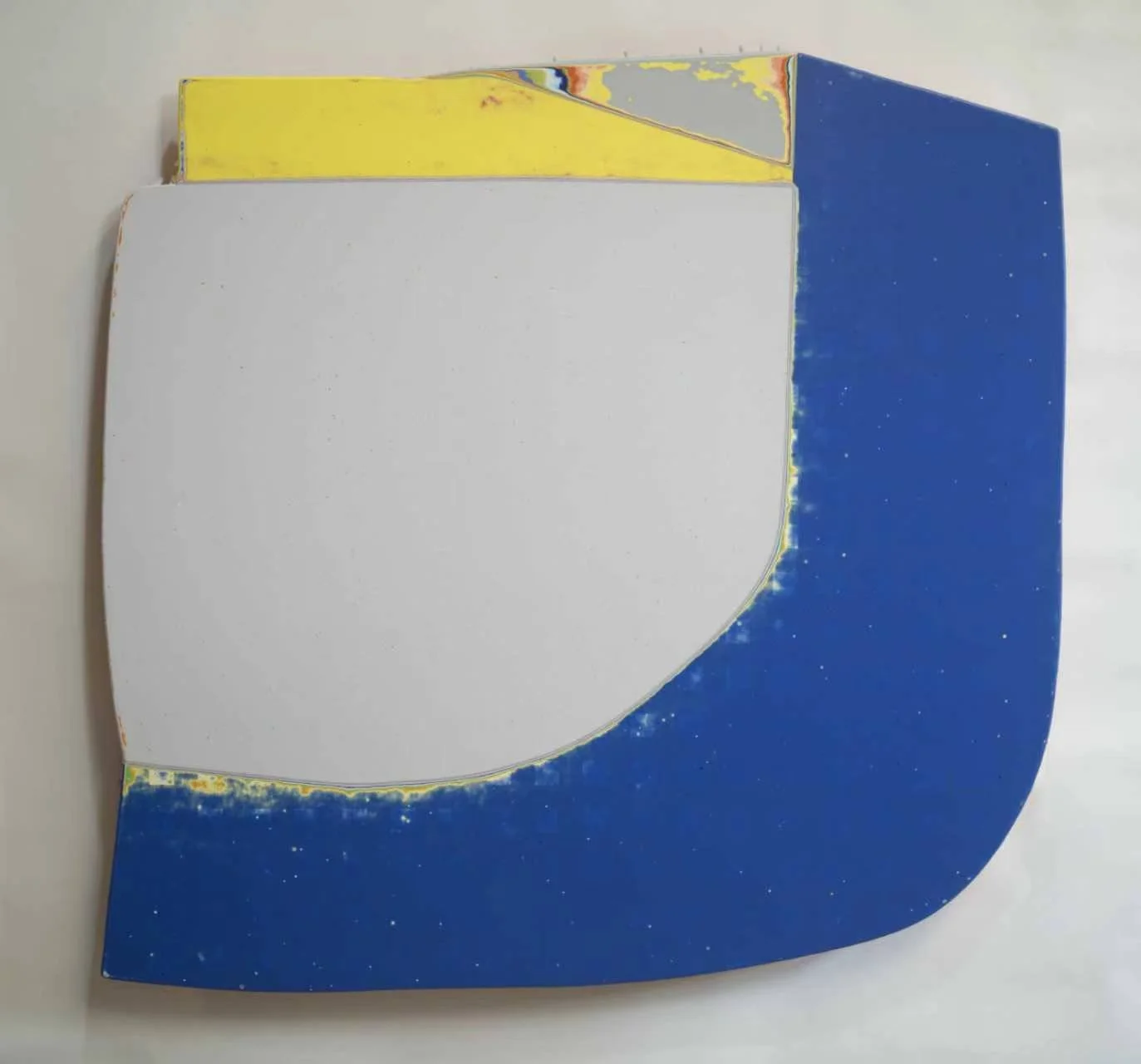
Squares Beneath Blue , 2026 , Mixed Media on Canvas , 120 × 120 cm
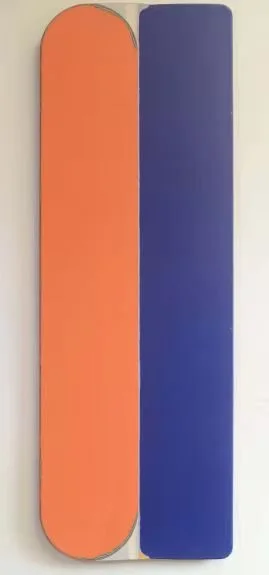
2020.12.06--2021.01.22 , 2020 , Mixed Media on Canvas , 179 × 62 cm
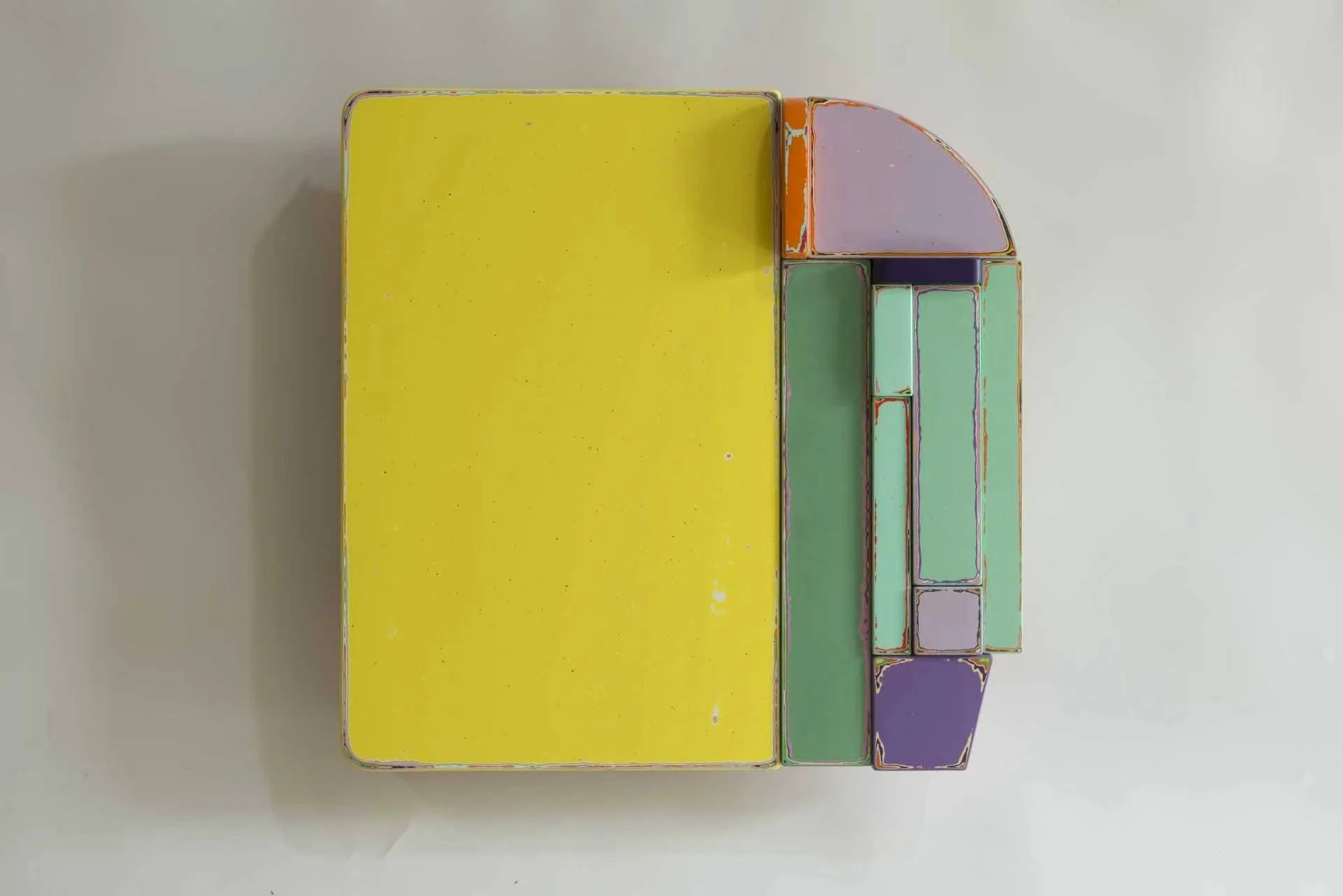
2024-65 , 2024 , Mixed Media on Wood Panel , 52 × 52 × 7 cm
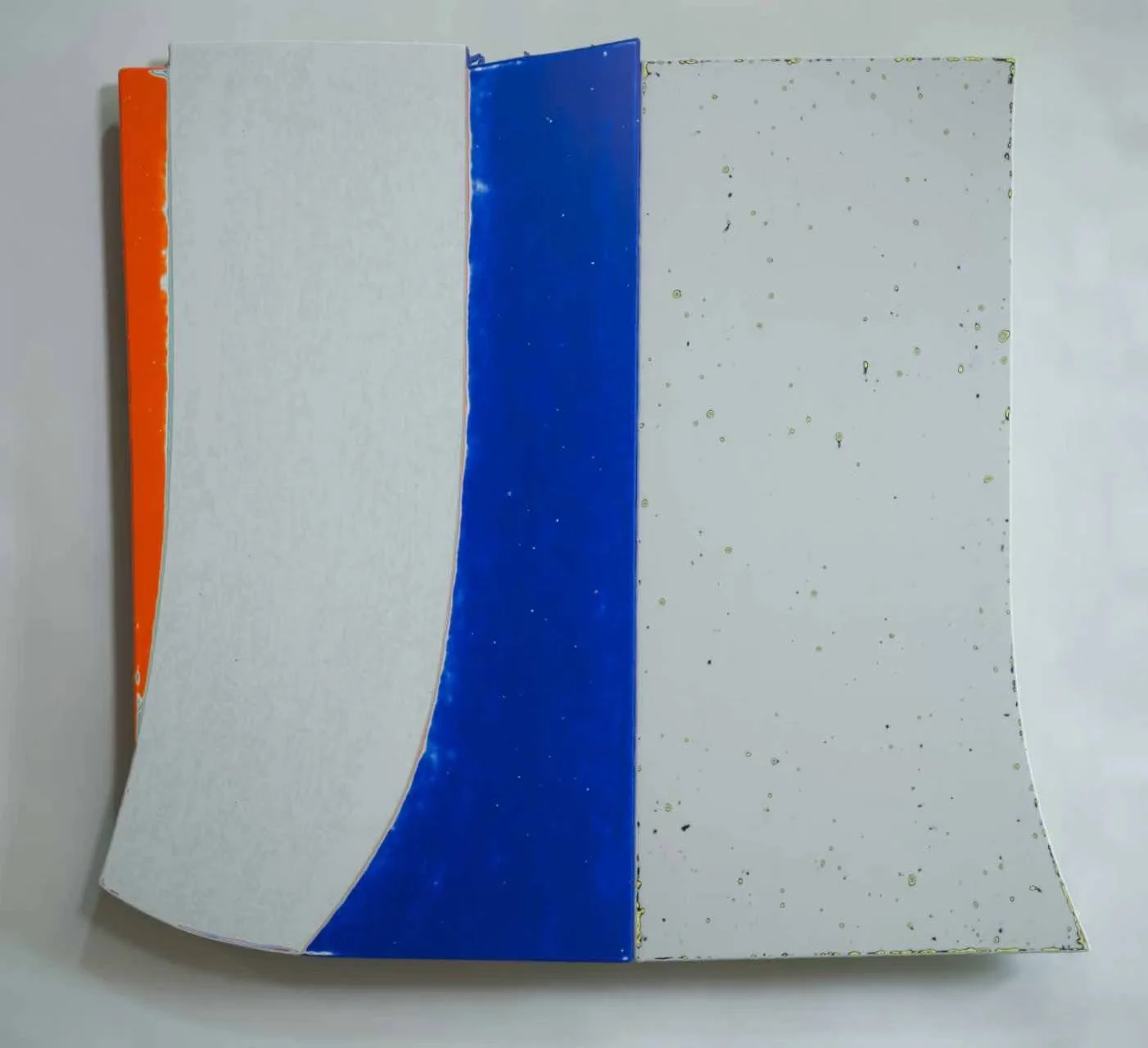
Orange Straight Wall , 2026 , Mixed Media on Canvas , 117 × 109 cm
Artists
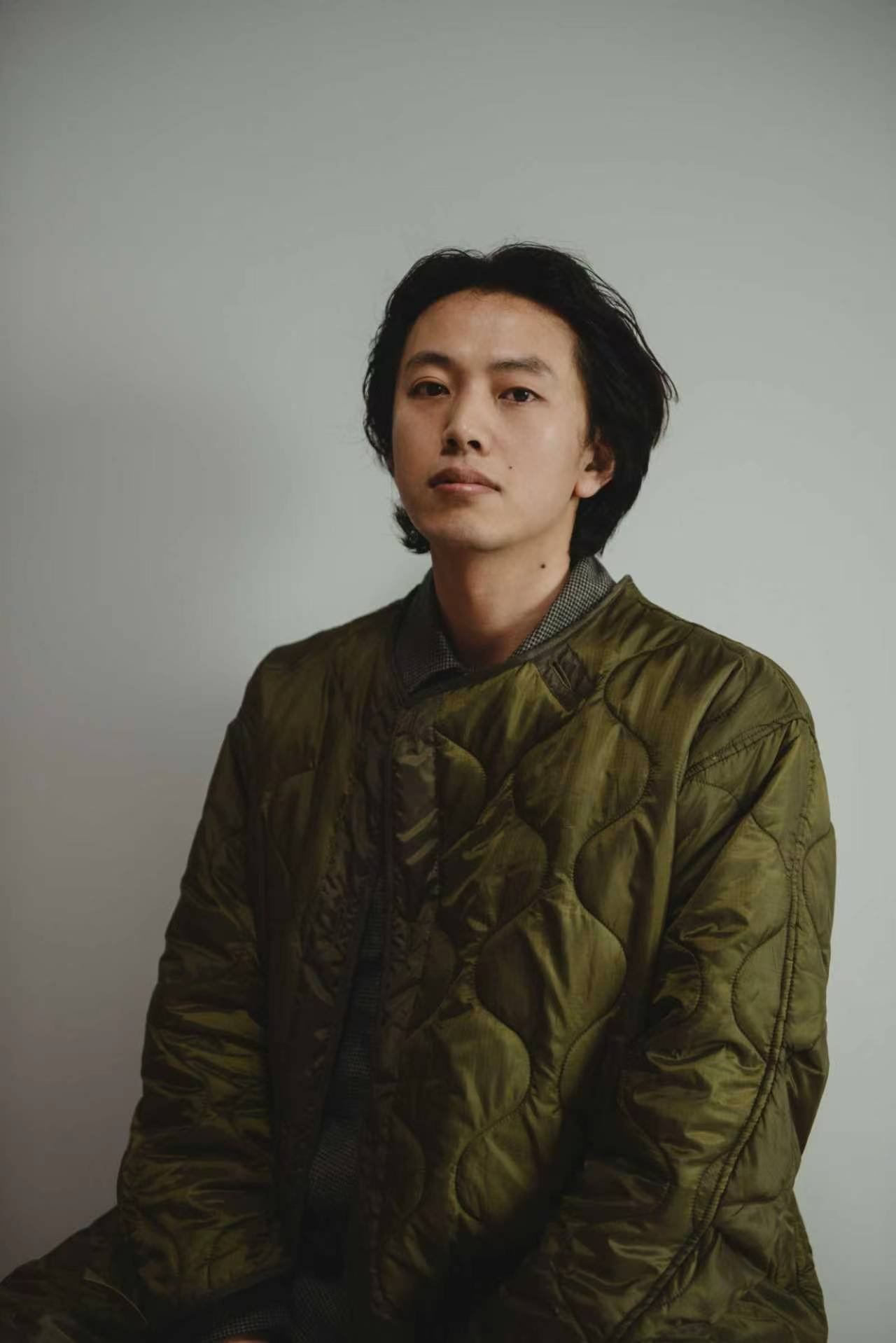
Yin Maojian, born in 1986 in Jinan, Shandong Province, currently lives and works in Beijing. He received his bachelor’s degree in oil painting from Shandong University of Arts in 2009, and in 2011 completed the graduate-level advanced study program in oil painting at Renmin University of China.
Taking “partial play, complete pleasure” as the core of his practice, Yin regards the prolonged duration of painting as a creative medium in itself. Through the repeated labor of sanding, dismantling, and reassembling, he captures a form of controllable chance. The artist makes skillful use of dotted textures, layered fields of color, and joined lines to disrupt the conventional notion of pictorial completeness, allowing his works to remain in a state of flux and incompletion. In doing so, he transforms the fatigue of labor and the pleasure of creation into layered visual depth.
His works are marked by restrained and delicate colors, within which shifting light, shadow, and contradictory spaces are subtly concealed. With a playful sense of freedom, Yin reshapes the visual language of oil painting. His works have been presented on major art platforms in China and abroad, including Beijing Contemporary, Art Shenzhen, Taipei International Art Fair, and K11 Art Space.